


Memory does not merely preserve what we have been. It helps create what we become.
The book | Publishing and rights | About the author | Selected publications | Contact
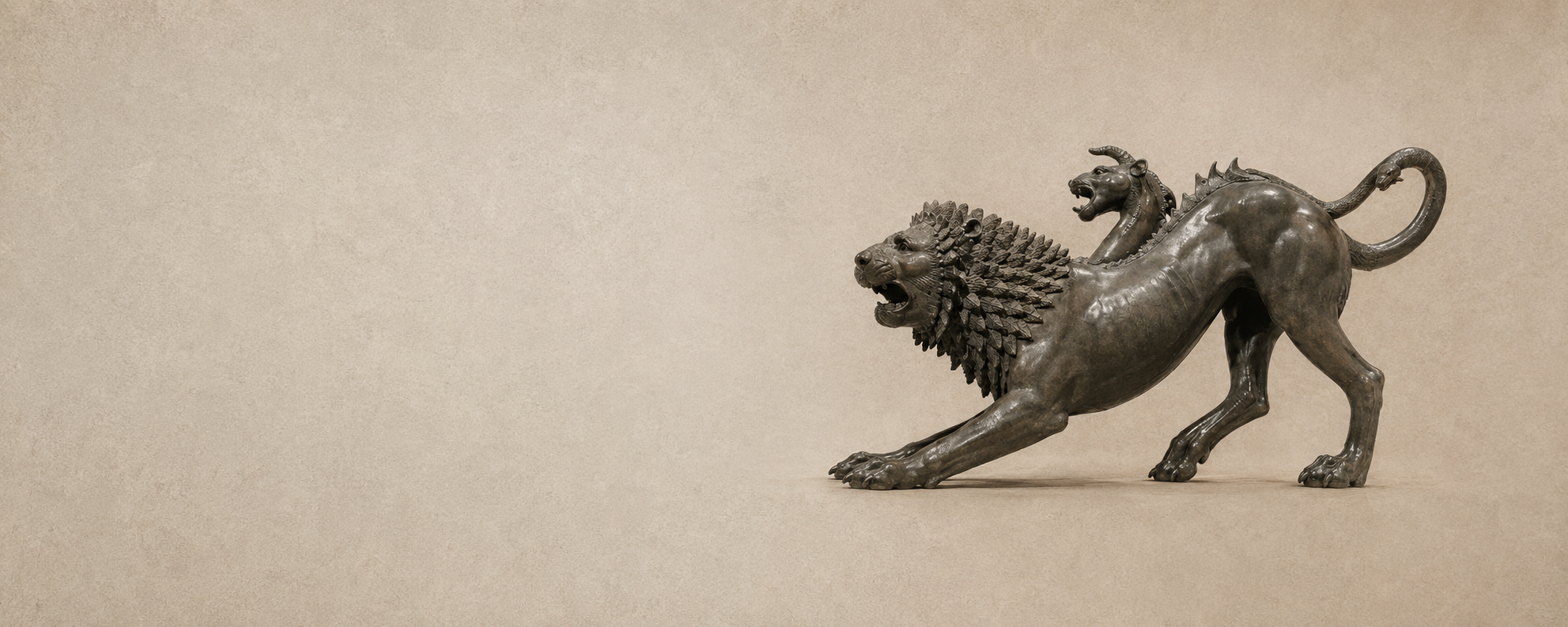
The Memory Principle: How Time Gives Birth to Consciousness presents the central idea of a long-term research project by Italian author, essayist and philosopher Sauro Tronconi. Developed since the 1980s, the project brings philosophy, psychology, neuroscience, anthropology, semiotics and the study of symbolic traditions into a single question: what allows a human being to remain connected with oneself while time continually changes us?
The usual account treats memory as an archive. Some events remain, some fade and others are reconstructed. This is accurate, but incomplete. Memory does not simply record experience. It selects, connects and interprets it. Through these operations, scattered moments may become a form of personal continuity. Without that continuity, we would lose more than the past. We would lose the possibility of saying “I” across time.
Memory beyond storage
The central thesis is that memory is not merely a container used by consciousness. It is one of the processes through which consciousness takes form. Every experience can leave a trace, but not every trace becomes self-knowledge. For this to happen, what has been lived must be recognised, connected and transformed into orientation.
Personal continuity therefore depends less on the quantity of our memories than on the quality of the relations we establish among events, bodily sensations, emotions, intentions and the consequences of our actions. To remember is not simply to recover an image of the past. It is to understand which part of us was present, which part was absent, what we chose and what merely happened through us.
Horizontal memory and vertical memory
Horizontal memory arranges events along a line: before, during and after. It is essential for orientation, narrative and the recognition of sequence. Vertical memory moves differently. It returns to experience and reconstructs its depth by connecting an event with the quality of attention, bodily perception, contradictions, intentions and the degree of freedom with which it was lived.
Horizontal memory recalls what happened. Vertical memory asks who we were while it was happening.
This distinction does not introduce a mysterious new faculty. It describes a way of working with memory. An event may be recalled accurately and remain sterile. Another may be reconsidered in depth and change the way we understand ourselves. In the first case, we possess information. In the second, experience becomes consciousness.
Why time is not enough
People often say that time teaches. Time alone teaches nothing. It can accumulate repetition, habit and defence. Experience becomes learning only when it is recognised and integrated. A person may have lived through many events while remaining trapped in the same automatic responses. A single episode, fully observed, can sometimes produce a genuine change of direction.
Memory is the point at which time can cease to be the simple consumption of life and become elaboration. The past is neither erased nor worshipped. It becomes material from which responsibility, direction and the possibility of choice can emerge.
The contemporary crisis of continuity
Digital culture multiplies information while weakening our capacity to connect it. Attention is interrupted, redirected and solicited without rest. We preserve enormous quantities of images, messages and data, yet risk transforming less and less of what we live into personal experience.
The problem is not only distraction. It is the fragmentation of inner continuity. When each instant is replaced by the next before it has been understood, identity tends to become a sequence of reactions. Many contents are retained, but the thread that joins them is lost. Vertical memory can then become a form of resistance to automatic behaviour. It restores duration to attention and allows us to recognise how the present is becoming the past within us.
The book
The Memory Principle: How Time Gives Birth to Consciousness is an interdisciplinary work of idea-led nonfiction. The completed Italian manuscript, Il principio della memoria. Tempo e nascita della coscienza, develops the argument through a dialogue among neuroscience, philosophy of mind, psychology, anthropology, semiotics and contemplative traditions.
The book is not a self-help manual and does not use science as decoration for a spiritual doctrine. It searches for a workable boundary among what present knowledge can support, what remains a philosophical hypothesis and what can be examined in lived experience. Its purpose is not to defend a final definition of memory, but to understand the conditions under which life stops merely passing through us and begins to become consciousness.
For international publishing professionals
- International title: The Memory Principle: How Time Gives Birth to Consciousness.
- Category: public philosophy, popular psychology and consciousness studies; idea-led nonfiction for educated general readers.
- Source manuscript: complete and unpublished in Italian, approximately 67,000 words.
- Rights: publishing and translation enquiries should specify the language, territory and format. Rights availability is confirmed for each enquiry.
- Rights scope: book translation and publishing rights only. Film, television, animation, documentary, merchandising, educational and AI-related rights are excluded unless separately negotiated.
- Materials: complete English, French, Spanish and German translations are available for editorial consideration, together with an English-language proposal and sample. The version and review status of each text are specified when supplied; availability for evaluation does not imply publication.
Publishing, translation, research and media enquiries: contact Sauro Tronconi.
About Sauro Tronconi
Sauro Tronconi is an Italian author, essayist and philosopher. For more than forty years he has conducted independent research into memory, attention, time and the transformation of experience. He founded Espande Magazine and the Espande Institute, now Espande Academy, and has conducted more than two thousand seminars, lectures and research programmes in Italy and abroad.
He has published essays and novels, written for RAI, and co-authored a pilot study on self-awareness published in Psychological Reports and indexed in PubMed. View the published study. His current work examines memory as a principle of continuity and the effects of technological and cultural acceleration on attention and human experience.
Selected publishing record
- Beyond the Sin of Unconsciousness: Self Awareness and Inner Evolution in Contemporary Man, English-language edition, Es·Books, 2020.
- Jenseits der Unbewusstheit: Selbsterkenntnis und innere Entwicklung des modernen Menschen, German-language edition, Arbor-Verlag, 2009, ISBN 9783936855913. Bibliographic record.
- Divine Silence: In the Grace of the Ineffable, Italian-language work with an English title, published in 2025; a separate English-language edition is now available from Es·Books.
- Cerca Trova, also available in English as Seek and Find and in Spanish as Busca y encuentra, Es·Books.
- La spada di sabbia, novel, Italian.
- A pilot study on self-awareness, published in Psychological Reports, 2010.
Italian presentation: Il principio della memoria. Selected books: Books and publications. Professional profile: LinkedIn. Academic profile: Academia.edu.